
Quentin Grimes wore a wrap on his right pinky when he talked to reporters this week, and he expects to play Sunday in Phoenix. He missed the last two games with a sprained finger on his right hand, then went through the live portion of the Lakers’ stay-ready game Wednesday. “I had a really good day just playing with a little tape over it,” Grimes said, per Broderick Turner of the Los Angeles Times. “Just seeing how it felt the first time, but it felt really good.”
Good. The Lakers need him Sunday, with Austin Reaves day-to-day on a bruised heel. But his return shouldn’t come out of Ziaire Williams’ minutes, now or once Reaves is back. Williams has been the better wing for this team over 13 games, and the gap is wide enough that JJ Redick should stop splitting the minutes evenly. Grimes comes back as the defensive guard. Williams gets the bigger slice.
The Numbers Aren’t Close
Grimes is averaging 26.1 minutes, Williams 24.1, per Basketball Reference. That’s backwards.
Williams is scoring 11.0 points a game on a 72.1% true shooting percentage. He’s made 20 of 43 threes, 46.5%. His Box Plus/Minus is 3.9, second on the team behind Luka Doncic among players with 200 minutes. Grimes is at 8.0 points on 55.0% true shooting, and his Box Plus/Minus is minus-2.5.
The on-off split says the same thing louder. With Williams on the floor for 241 minutes, the Lakers have scored 132.4 points per 100 possessions and outscored opponents by 14.4 per 100, per Basketball Reference’s on-off page. With him off, they’ve been plus-4.9. Grimes’ minutes come out at plus-8.7 with him on and plus-8.4 without him, a wash.
Then there’s the ball. Williams has four turnovers in 241 minutes this season. Grimes has 15 in 287. The Lakers rank 25th in the league in turnover percentage, and a wing who almost never gives it away is worth a lot on a team that does it constantly. I wrote about the Lakers’ turnover problem after the Warriors collapse, and Williams is the one rotation player who hasn’t been part of it.
Yes, Williams’ Shooting Will Cool Off
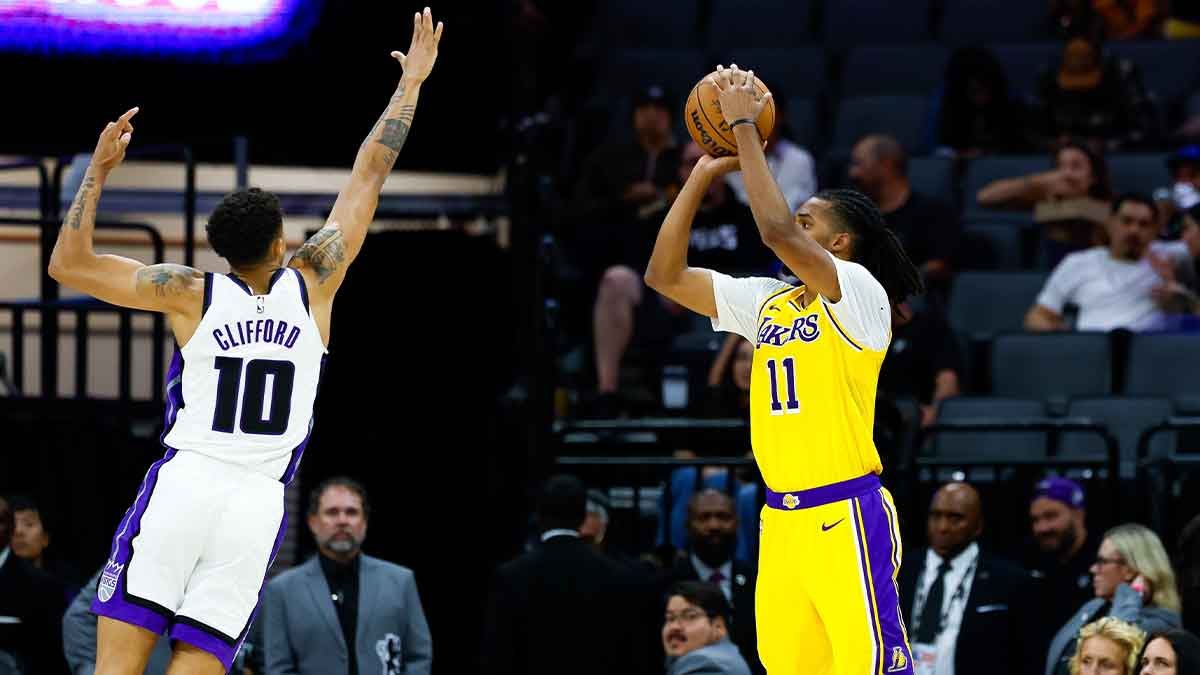
I’m not pretending 46.5% from three is who Williams is. He shot 34.1% and 34.3% from deep in two seasons in Brooklyn, and he’s a 32.7% shooter for his career, per his Basketball Reference page. Forty-three attempts is a small sample. Some of those threes are going to start rimming out.
Most of his efficiency comes from those threes, too. He has taken 43 of his 71 shots from deep, 60.6%, per his game log, which is a bigger share than the Brooklyn diet I wanted the Lakers to move him away from when I argued in October that he should build his Lakers role around cuts. The part I trust to last is the ball security. Williams is averaging 0.4 turnovers a game, and turnovers come from decisions, which don’t cool off the way a hot shooting month does. If he shoots 37% from here on and keeps the turnovers near zero, he still deserves the minutes.
Grimes is the opposite case. His shot should come back, and I’d bet on it. He’s a 36.3% career three-point shooter. He’s made 8 of 33 this season, 24.2%, and only 5 of 26 since his three-for-five night against the Clippers on Oct. 23, per his Basketball Reference game log. He’s also taking 3.0 threes a game after averaging 5.1 in Philadelphia last season. When Redick said he’d pull players who pass up open threes, I wrote that Grimes should hear that warning first. Twelve days later, the volume hasn’t moved.
Where Grimes Earns His Minutes
Grimes’ best case is defense, the part of the game Redick put in front of the whole team in Friday’s film session. Turner reported that Redick told the team they “were 17th in defense” and 27th in rebounding. Basketball Reference has the Lakers 17th in defensive rating and 27th in defensive rebound percentage.
Grimes helps with the first part. With him on the floor, the Lakers have allowed 112.1 points per 100 possessions. With him off, they’ve allowed 117.6. Williams goes the other way: 118.0 allowed with him on, 113.1 with him off. On-off defense over a few hundred minutes is noisy, and lineups explain some of it. Still, it’s the one on-off column where Grimes has the edge, and on a team that just got told it’s 17th in defense, that column counts.
Even Williams heard the message. “Being first in the West, with the stuff that they showed us, you would think we were almost last, you know?” he said, per the Times. “But it’s gotta keep us honest.”
So here is how I’d split it. Grimes is a defender first until the shot comes back, the guy Redick sends at the other team’s best perimeter scorer for 18 to 22 minutes. Williams gets 26 to 28 minutes as the wing who plays off Doncic, because he’s the one turning those possessions into points. When the matchup calls for a stopper late, Grimes closes. When the Lakers need to score, Williams does.
Sunday Is Different, and That’s Fine
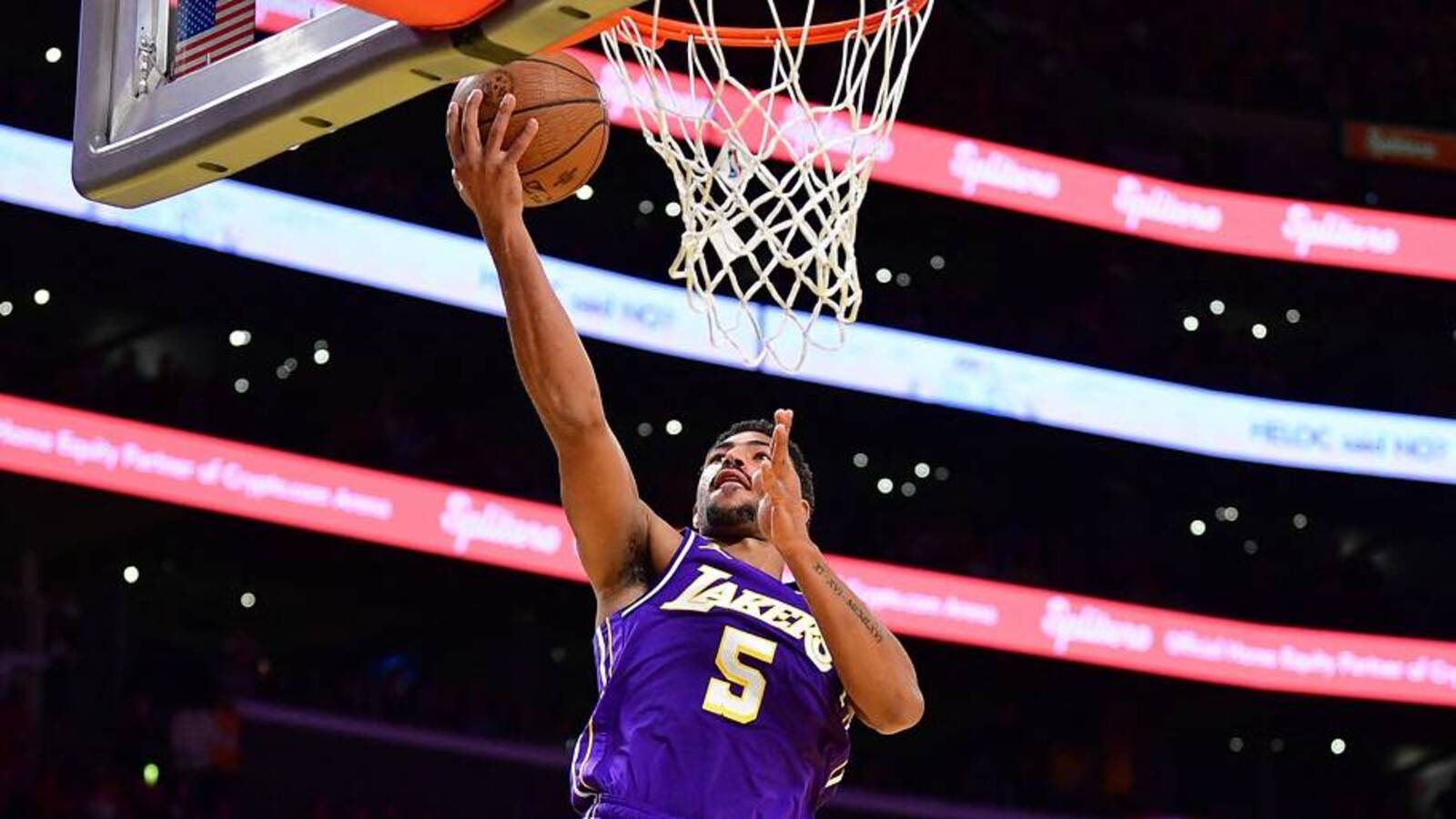
Phoenix is the easy call. Reaves is day-to-day with the heel, and I already argued the Lakers should sit Reaves in Phoenix and bring him back Tuesday against Charlotte. If he sits, there are enough guard minutes for Grimes to play 28 and Williams to play 28 without anyone getting squeezed. Grimes can take some of Reaves’ ball-handling work and the toughest perimeter assignment, and Williams stays where he’s been useful.
The question that matters starts once Reaves is back and Collin Sexton is past his stitches. That’s when the minutes get tight on the wing, and that’s when Redick has to choose. Williams has been inactive for three games already this season with a sore left foot, per NBC Sports, so keeping him healthy matters too. But a healthy Williams should play more than Grimes.
Grimes is a good player having a bad shooting month, and the Lakers should want him on the floor in Phoenix. When the rotation is whole again, the minutes should follow the 13 games we’ve actually watched, and those games point to Williams.