
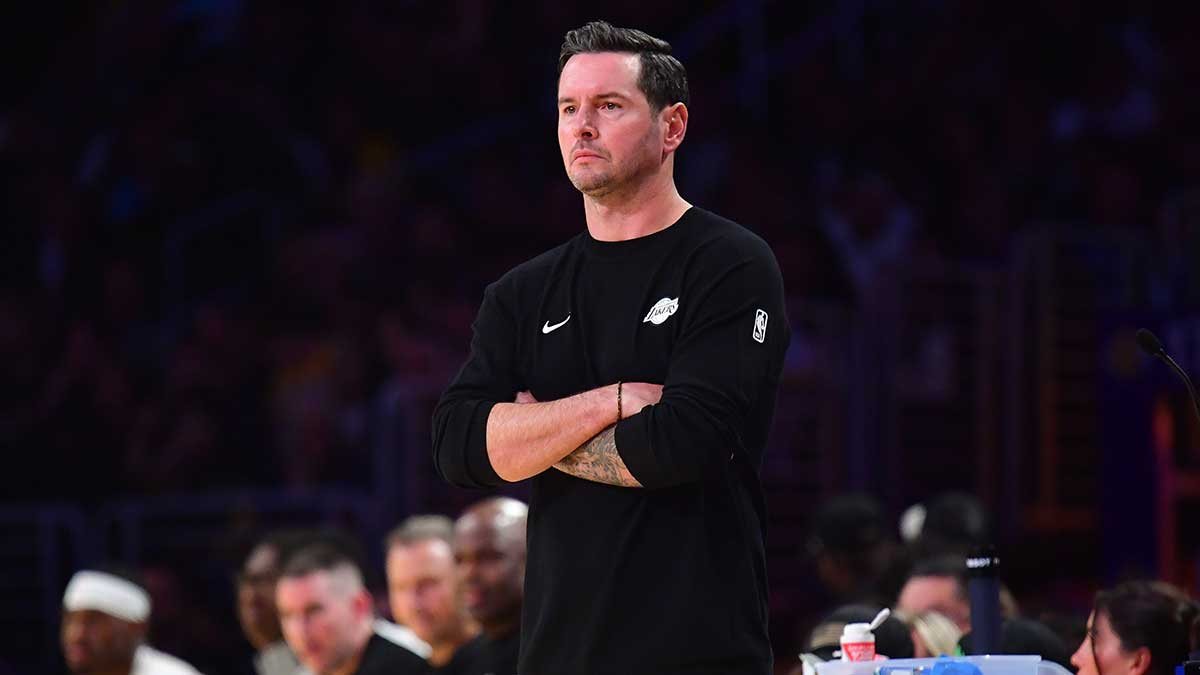
JJ Redick used the Lakers’ three-day break to do something most 11-2 coaches would skip. He audited his team. On Friday he walked the players through a 21-page analytics breakdown, ESPN’s Dave McMenamin reported, with the stats sorted by the identities the staff wants this team to play with. Redick said they’ve run it that way for two and a half seasons. On defense there are three, and Redick listed them for reporters: “organized, physical as hell and relentless,” per Broderick Turner of the Los Angeles Times.
Run the numbers through the last two words and you get a split. Relentless is real; this team takes the ball away as well as anybody in the league. Physical is the one that fails the audit, and the evidence is on the defensive glass. My take: the Lakers don’t need a new scheme to fix it. They need their wings to stop leaving Walker Kessler and Luka Doncic to finish every stop, starting Tuesday against the best offensive rebounding team in the NBA.
Turner reported that Redick told the players they “were 17th in defense,” and Turner noted that the Lakers are 27th in rebounding. As of Saturday morning, after other teams played Friday, Basketball Reference has the Lakers 28th in defensive rebound percentage. That’s the number I’d have put on page one.
Relentless Passes
Start with what works. The Lakers lead the league with 11.0 steals a game, per Basketball Reference. They force 18.5 turnovers a game, third-most, and their opponents turn it over on 15.9% of their possessions, also third. The league average is 13.5%.
Matisse Thybulle is the face of it. He has started all 13 games and averages 2.2 steals in 24.4 minutes, with a steal percentage of 4.3, the highest of any Laker playing regular minutes, per the Lakers’ Basketball Reference page. That’s exactly the player I described before the season in the case for Thybulle as the Lakers’ wing stopper: a gambler who needs a big man behind him to clean up the misses. Kessler has been that big man.
Nobody is asking Redick to tone that down. A team that forces turnovers on almost one in six trips is earning a lot of empty possessions for the other side. The problem is what happens on the possessions that end in a missed shot.
Physical Fails
The Lakers grab 68.6% of available defensive rebounds. Only Milwaukee (68.3%) and Phoenix (66.6%) are worse, and the league average is 72.9%, per Basketball Reference. That gap works out to roughly four extra offensive rebounds for opponents for every hundred missed shots, and it shows up in the raw count too. Opponents are pulling down 13.5 offensive rebounds a game against the Lakers, fifth-most in the league.
The game log tells you it isn’t one bad night. Opponents grabbed 15 or more offensive rebounds in six of the 13 games: Utah had 20, Toronto had 22 and Detroit had 18, per Basketball Reference’s game log. The Lakers won all three of those games, which is part of why nobody panicked. An offense that leads the league in scoring can cover a lot of second chances. It shouldn’t have to.
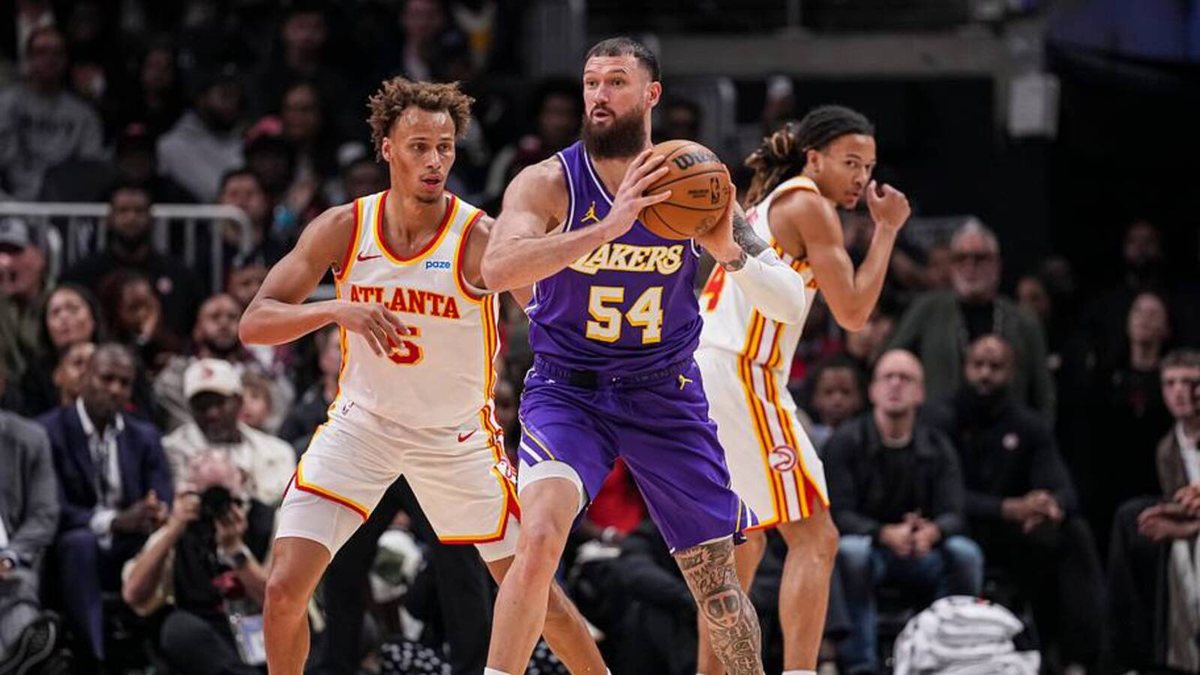
The fouls belong in the same column. The Lakers commit 23.4 fouls a game, above the league average of 22.1, and opponents shoot 28.1 free throws a game against them, seventh-most. Their opponents’ free throw rate is .248 per field-goal attempt, 24th in the league. Portland shot 41 free throws in its October win and 37 more in the rematch, and the Lakers were called for 29 fouls in each game. “Physical as hell” should mean bodies on bodies before the shot goes up, and fewer whistles after it.
The Wings Have to Finish the Play
Here’s where I’d point the audit. The bigs are doing their share. Kessler grabs 26.5% of available defensive rebounds when he’s on the floor, Doncic 22.3% and Sandro Mamukelashvili 16.3%, per Basketball Reference. Doncic is pulling 7.2 defensive rebounds a game, almost as many as Kessler’s 7.3.
Then look at everyone else. Thybulle’s defensive rebound percentage is 6.3. Ziaire Williams is at 7.9, Austin Reaves 8.2, Jake LaRavia 8.3 and Quentin Grimes 9.3. LaRavia is the strangest line on the sheet: he averages more offensive rebounds (2.2) than defensive ones (1.8). He’s going to the glass. He’s just doing it at the wrong end.
Some of that comes with Thybulle’s job. A wing jumping passing lanes is a step out of rebounding position by design, and I’ll live with that from him. It can’t be true of every wing at once. When Kessler leaves his man to challenge a drive (and he should, every time), somebody on the weak side has to find a body. The Lakers were already 28th in defensive rebounding eight games in, when I wrote that the Kings player to worry about was Domantas Sabonis. Five games and five wins later, they still are.
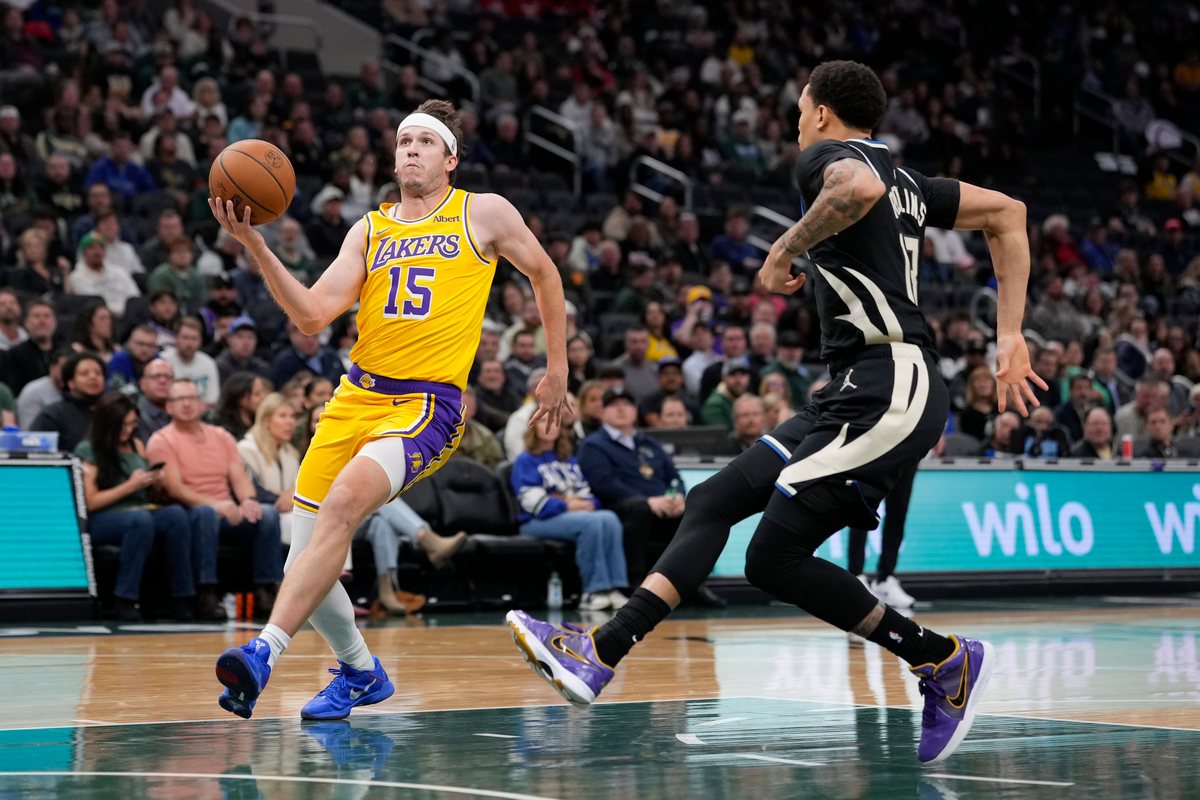
This is also the other half of the leak I wrote about this week, when I argued that Kessler has closed the rim while the Lakers give away threes. Wings who rotate late give up the three. Wings who leak out early give up the rebound. The fix for both is the same habit: finish the possession before you start the next one.
Charlotte Is the Test
The schedule makes this urgent fast. Sunday’s game in Phoenix is the gentle version: the Suns get 24.5% of their own misses, below the league average of 27.1%, and they’re even worse on their own glass, which is why I’d send Jake LaRavia after the misses in Phoenix. Reaves is day-to-day with a bruised left heel, and Quentin Grimes expects to play after missing two games with a sprained finger, per Turner.
Tuesday is the real exam. Charlotte is 4-8, and it leads the league in offensive rebounds at 15.0 a game and in offensive rebound percentage at 32.9%, per Basketball Reference. The Hornets stay in games by shooting twice.
If I’m Redick, that’s the night to grade the audit. I’d want the Lakers to hold Charlotte under its 15 offensive rebounds, and I’d count which wings got a body on somebody when the shot went up. If the answer keeps coming back as Kessler and Doncic, there’s a cheap lever on the bench. Jarred Vanderbilt has a 24.4% defensive rebound rate in 96 minutes this season, and I’ve already argued he earns his minutes by chasing rebounds at the other end. Against the Hornets, I’d point him at the defensive glass.
Redick said the staff talked about “20 things” to clean up. Put the defensive glass first. Charlotte will spend Tuesday night testing whether “physical as hell” is a habit or a slogan, and a team tied for the best record in the West can’t keep giving opponents a second shot.