
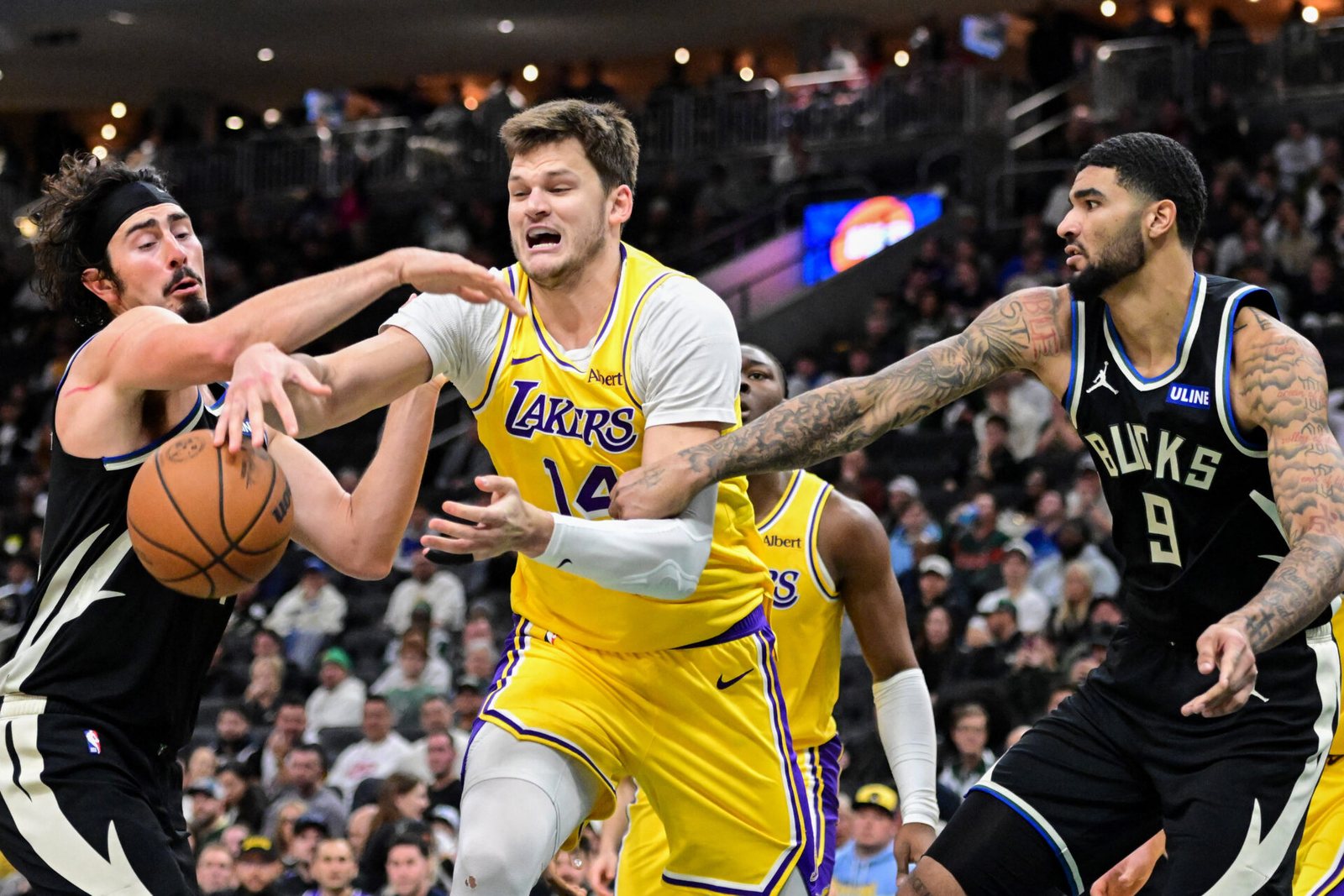
Walker Kessler has started all 14 Lakers games and played 433 minutes. In those minutes, the Lakers grabbed 68.0% of the available defensive rebounds. In the 239 minutes he sat, they grabbed 69.2%. That’s my count from ESPN’s play-by-play of every game this season, and it lines up with the team’s 68.4% on Basketball Reference.
So when the Lakers ruled Kessler out for Tuesday night against Charlotte, the best offensive rebounding team in the league, my first instinct was to picture Moussa Diabaté catching his own misses all night. The numbers talked me out of it. The Lakers’ defensive glass has been a problem with Kessler and without him. What they lose tonight is the rim and their own second chances, and Charlotte’s offense gets to the rim less than the Lakers’ usual opponent while its defense already takes away second chances. Start Sandro Mamukelashvili and stop panicking about the boards.
What the Lakers Announced
The Associated Press reported Monday night that Kessler will miss his first game of the season with right lower leg soreness, and that Austin Reaves will miss a second straight game with the heel he bruised in Milwaukee. ESPN’s injury report lists both as out. Kessler, listed at 7-foot-2 by the AP, is averaging 14.5 points, 10.9 rebounds and 2.2 blocks. Reaves is averaging 24.7 points.
The Lakers have won eight straight, and this is the first of four home games in seven days, per the AP. Utah, the team Kessler forced his way out of, visits Wednesday night.
Last week I argued the Lakers should rest Reaves in Phoenix and bring him back for Charlotte. They’re giving the heel another night instead, and they’ve won both games he’s missed this season: 124-114 in Atlanta and 131-123 in Phoenix. Quentin Grimes started in Phoenix and scored 22 on 7-for-10 shooting, per ESPN’s box score. Without Kessler, the bigger question is the middle.
The Glass Was Never Kessler’s Alone
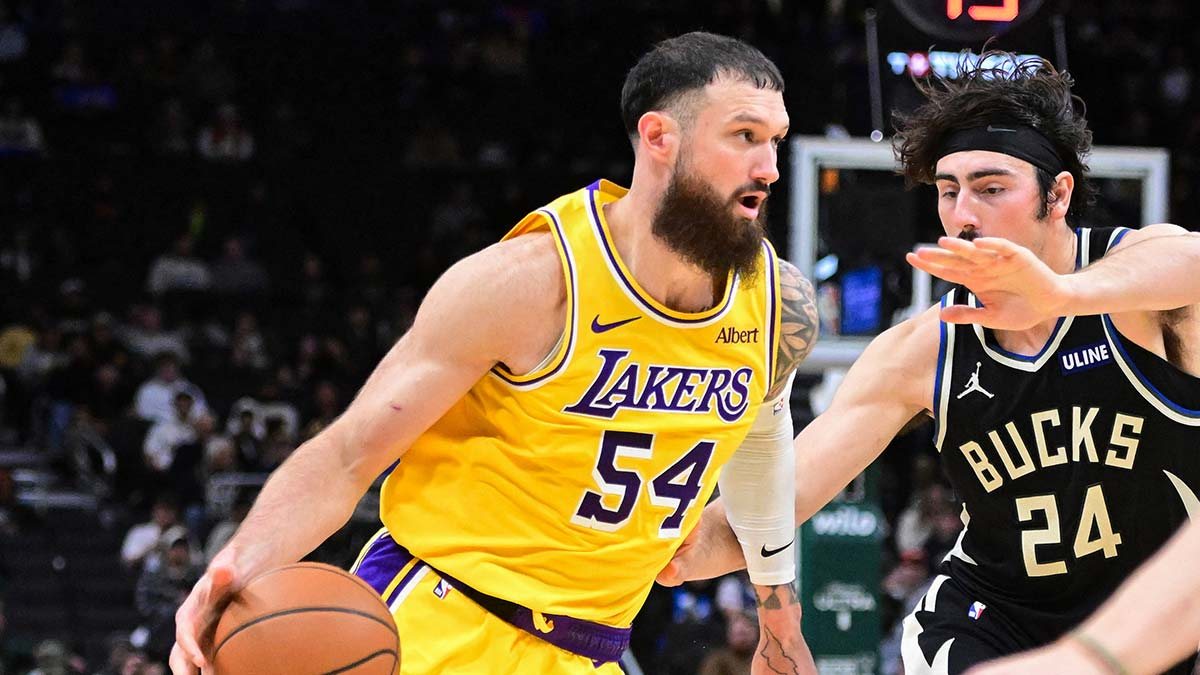
Kessler does his job on the defensive glass. His personal defensive rebound rate is 26.0%, the best of any Laker with 100 or more minutes, per the Lakers’ Basketball Reference page. The team rate just doesn’t move when he leaves. Opponents grab 13.8 offensive rebounds per 48 minutes with him on the floor and 13.2 with him off.
The Lakers are 29th in defensive rebound percentage at 68.4%, against a league average of 72.8%, per Basketball Reference, and the rate barely changes with Kessler on or off. It’s a five-man problem, which is why I argued last week that the defensive glass was the place to start on JJ Redick’s list.
Charlotte will test it. The Hornets lead the league in offensive rebound percentage at 33.1%, per Basketball Reference. Diabaté averages 5.5 offensive rebounds a game, and backup center Ryan Kalkbrenner adds 3.1 in 18.5 minutes. That’s a bad matchup with Kessler too. Tonight’s assignment is the same one as every night: five bodies hit someone when the shot goes up.
What Kessler Actually Takes With Him
The rim is the first thing. With Kessler on the floor, opponents attempt 24.7 shots per 48 minutes that ESPN’s play-by-play logs as layups, dunks, alley-oops, tip-ins or putbacks, and they make 56.1%. With him off, it’s 31.7 of those shots per 48, and they make 63.9%. His block percentage of 7.6% is also the highest of any Laker with 100 or more minutes. That’s the job the Lakers acquired him to do.
The second thing is the Lakers’ own offensive glass. With Kessler on, they rebound 33.2% of their misses. With him off, 22.9%. And Charlotte leads the league in defensive rebound percentage at 78.5%, so the extra possessions Kessler usually creates were going to be hard to come by tonight anyway.
Add it up and the scoreboard says what you’d expect. Kessler is plus-120 for the season in ESPN’s box scores, while the Lakers have outscored opponents by 111 points overall, so they’re minus-9 in the 239 minutes without him. That’s a real gap, and I’m not pretending otherwise.
Charlotte Is the Right Team to Miss Him Against
This is where the schedule did the Lakers a favor. Charlotte doesn’t live at the rim. The Hornets have scored 37.2 points in the paint a game, per ESPN’s box scores, while the Lakers’ opponents have averaged 43.4. They take 22.3 of those shots at the rim a game in ESPN’s play-by-play logs. What they do take is threes: 44.8 a game, the most in the league, at 31.3%, 29th, per Basketball Reference.
The Charlotte starter who most changes the center matchup is Naz Reid. He has started all 13 games, averages 17.2 points and takes 6.9 threes a game at 34.4%, per the Hornets’ Basketball Reference page. A big who spends his night defending Reid on the perimeter isn’t protecting the rim either way.
So Charlotte asks less than the Lakers’ usual opponent for what Kessler does best, and its own strength, offensive rebounding, is something the Lakers handle the same with or without him. If you’re going to lose your starting center for a night, this is the opponent to lose him against. The Hornets preview laid out the bigger plan for this game, which is Matisse Thybulle and the turnover column, and nothing about Kessler’s absence changes it.
Start Mamukelashvili
That leaves the lineup question. In October I argued that Kevon Looney should be Kessler’s backup because of his rebounding. Redick went the other way, Looney has played 34 minutes all season, and the results back the coach.
Mamukelashvili has played 210 minutes with Kessler off the floor, and the Lakers have outscored opponents by about 40 points in them, counting from ESPN’s play-by-play. Jarred Vanderbilt’s minutes without Kessler have come out a little ahead too. The damage came in Looney’s 34 minutes, which the Lakers lost by close to 40. Mamukelashvili averages 23.4 minutes off the bench, takes 3.9 threes a game and makes 38.2% of them. He scored 23 against Atlanta and 23 in Milwaukee, going 5-for-8 from three in both, per ESPN’s box scores. A five who drags his man out to the arc gives Luka Doncic the driving lanes he wants.
Vanderbilt still has a role. His defensive rebound rate is 24.8%, per Basketball Reference, close to Kessler’s, in 108 minutes. In the 91 minutes without Kessler when Mamukelashvili was the only big on the floor, the Lakers grabbed 66.7% of the available defensive rebounds, worse than their rate with Kessler. I’d give Vanderbilt the minutes when Diabaté is on the floor and the possession is going to be decided by who gets inside position first.
What I wouldn’t do is spend the night chasing Charlotte’s offensive rebounding with lineups that can’t score. The Hornets have the league’s worst offense at 103.8 points per 100 possessions. The Lakers have the best at 123.0. A clean night on offense beats a perfect night on the boards.
My number to watch is Charlotte’s shots at the rim. Keep it near their 22 a game, and the league’s best offense should handle the rest before Kessler’s old team comes to town Wednesday.